Our Approach
The future is a cultural project
The ecological crisis is not only a crisis of resources, biodiversity or climate. It is also a crisis of imagination. Many of the systems that govern our lives were built around visions of the future in which human prosperity depended on the domination, extraction and consumption of the natural world.
What would happen if we began to construct entirely different visions of prosperity? What new cultures, technologies, belief systems and ways of inhabiting the Earth might emerge if we placed the living world at the centre of our imagination?
At Kairos Futura, we use art as a means of investigating these questions. Working at the intersection of ecology, speculative design, cultural knowledge and worldbuilding, we create environments in which people can collectively imagine, experience and begin to construct alternative futures.
Our work begins not with the future, but with the landscape.
An ecological worldbuilding practice
These six stages describe a practice artists can enter at different points. Making an object can send someone back to the forest. A question from an elder or a visitor can change the world a group thought it had finished imagining.
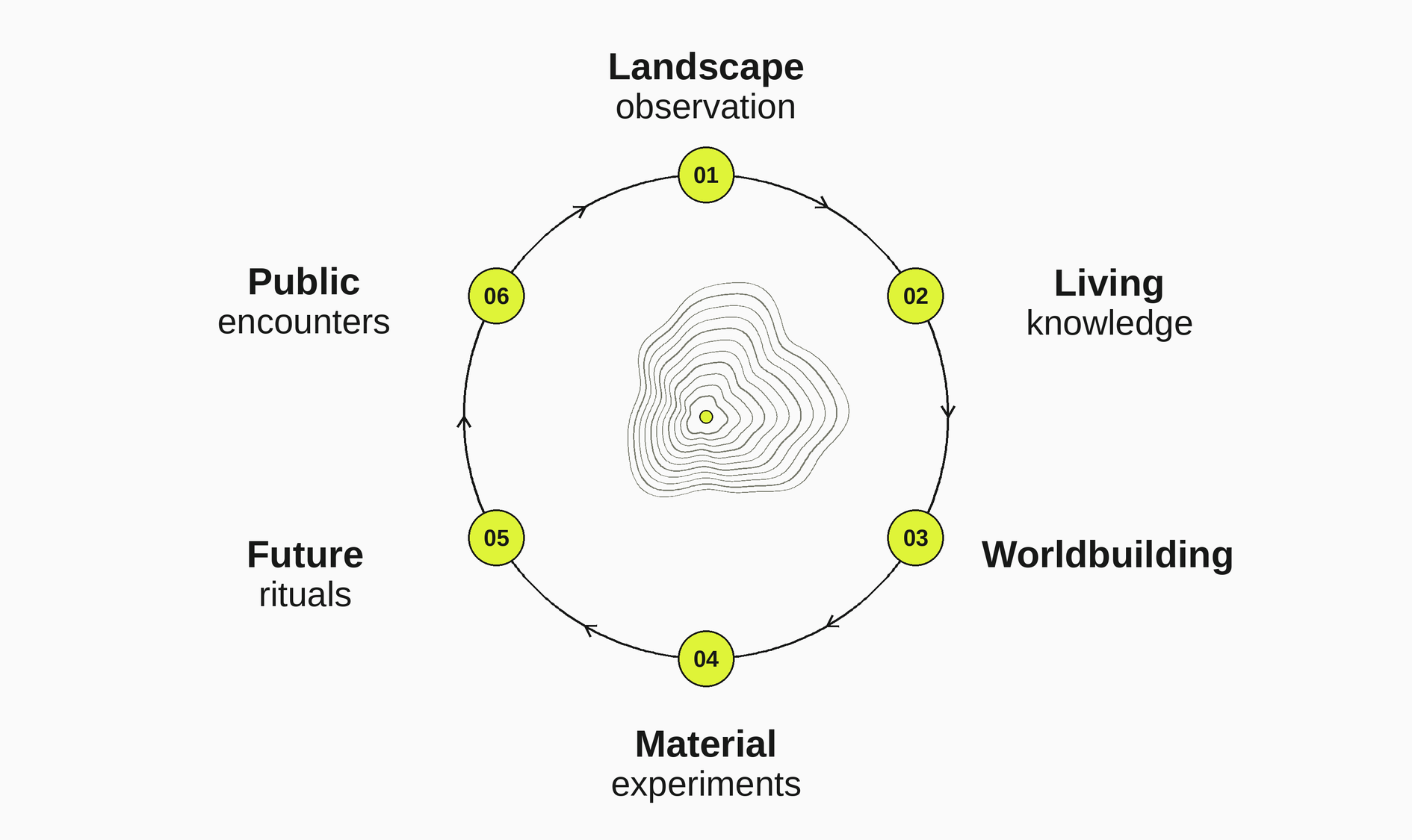
01. The landscape as a teacher
Every landscape contains an extraordinary archive of intelligence. Forests, rivers, soils, insects and other living organisms hold knowledge accumulated over millions of years of adaptation. Human communities carry their own knowledge of these environments through language, architecture, mythology, ritual and everyday practices.
Through wilderness expeditions, ecological observation, conversations with local communities and immersive field residencies, we invite artists to encounter landscapes as sources of knowledge rather than simply as resources or scenery.
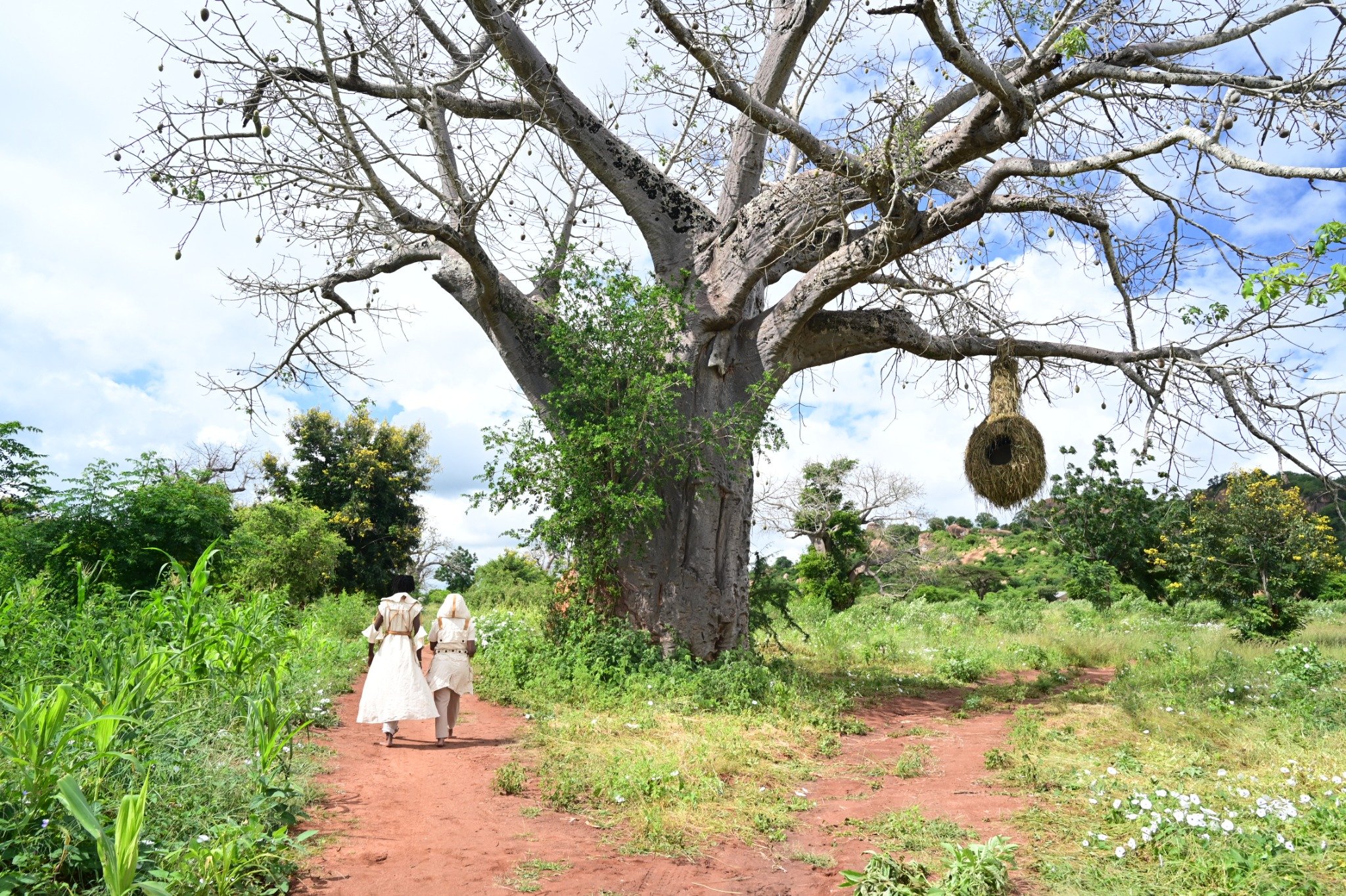
During our Safari Studio in the Chyulu Hills, participants embarked on five wilderness expeditions, investigating a volcanic landscape in which human settlements, wildlife, forests and ancient geological processes coexist. These encounters became the starting point for eleven creative projects exploring alternative relationships between people and the living world.
We believe that the ability to imagine different futures begins with learning to pay attention differently.
Safari Studio, Chyulu Hills, 2026. Five expeditions through the volcanic landscape gave seventeen participants the starting points for eleven projects. Courtesy Kairos Futura.
02. Between ancestral knowledge and future possibilities
The future does not have to be invented from scratch.
Many of the ideas that could help us navigate ecological uncertainty already exist within cultural practices that have developed through generations of intimate relationships with particular landscapes.
We are interested in the space between ancestral knowledge and radical speculation: what might emerge when traditional ecological understanding encounters contemporary art, emerging technologies and the imaginative capacities of younger generations?
In Kibwezi, our work with local guardians of sacred landscapes explores the relationship between ecological stewardship, spirituality and cultural continuity. In collaboration with knowledge holders, young artists are invited to investigate how existing traditions might inform new forms of ritual and environmental responsibility.
This is not an attempt to romanticise or reconstruct the past. It is an exploration of how living cultural knowledge, shared with the consent and participation of its custodians, might help shape futures that are both innovative and deeply rooted in place.
03. Constructing alternative worlds
Rather than asking participants to predict the future, we invite them to inhabit its possibilities.
What might a forest community look like in seventy years? What would people believe in a society organised around ecological regeneration? What would they wear, eat, celebrate or consider sacred? What institutions, economies and technologies might emerge?
Through speculative storytelling and collective worldbuilding, participants develop alternative societies with their own histories, aesthetics, belief systems and relationships with other species.
During our 2026 residency in the Mau Forest, artists explored an imagined future known as Mau 2099. Encounters with the forest, its inhabitants and its ecological challenges informed the development of artworks, garments, objects, maps and rituals belonging to possible future worlds.
On their collective map of Mau 2099, the artists imagined routes between forest sanctuaries and institutions of their own invention. Drawing a route raised questions a list of ideas could leave open. Who would need to travel through this forest? Where would they find care? Which places would they hold sacred?
By constructing these worlds in detail, we make visible the cultural assumptions embedded within our own society — and open them to experimentation.
Collins Rono · A cave and a winged horse
Drawing and project proposal, Masese, 2026. Rono imagined placing a small winged horse made of clay and stone inside a cave associated with prayers for rain. If an animal could grow wings, he reasoned, a damaged forest could become something that no one had yet seen.
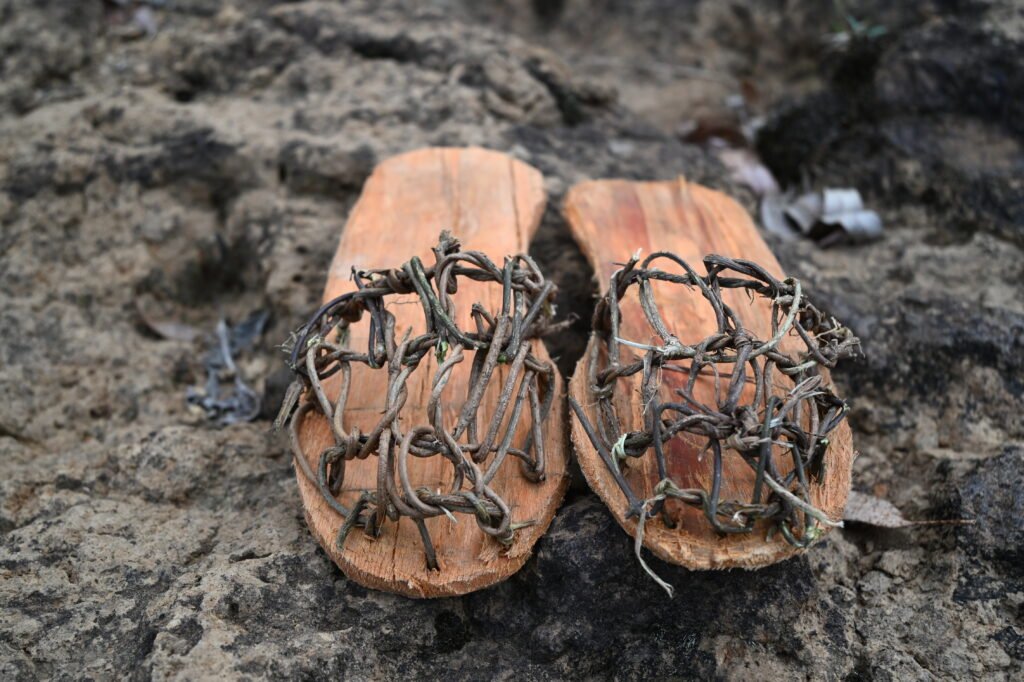
Footwear study. Mau 2099, Masese, 2026. Twisted strands fasten across a pair of wooden soles. How would people dress for a journey if the forest supplied their wardrobe? Courtesy Kairos Futura.
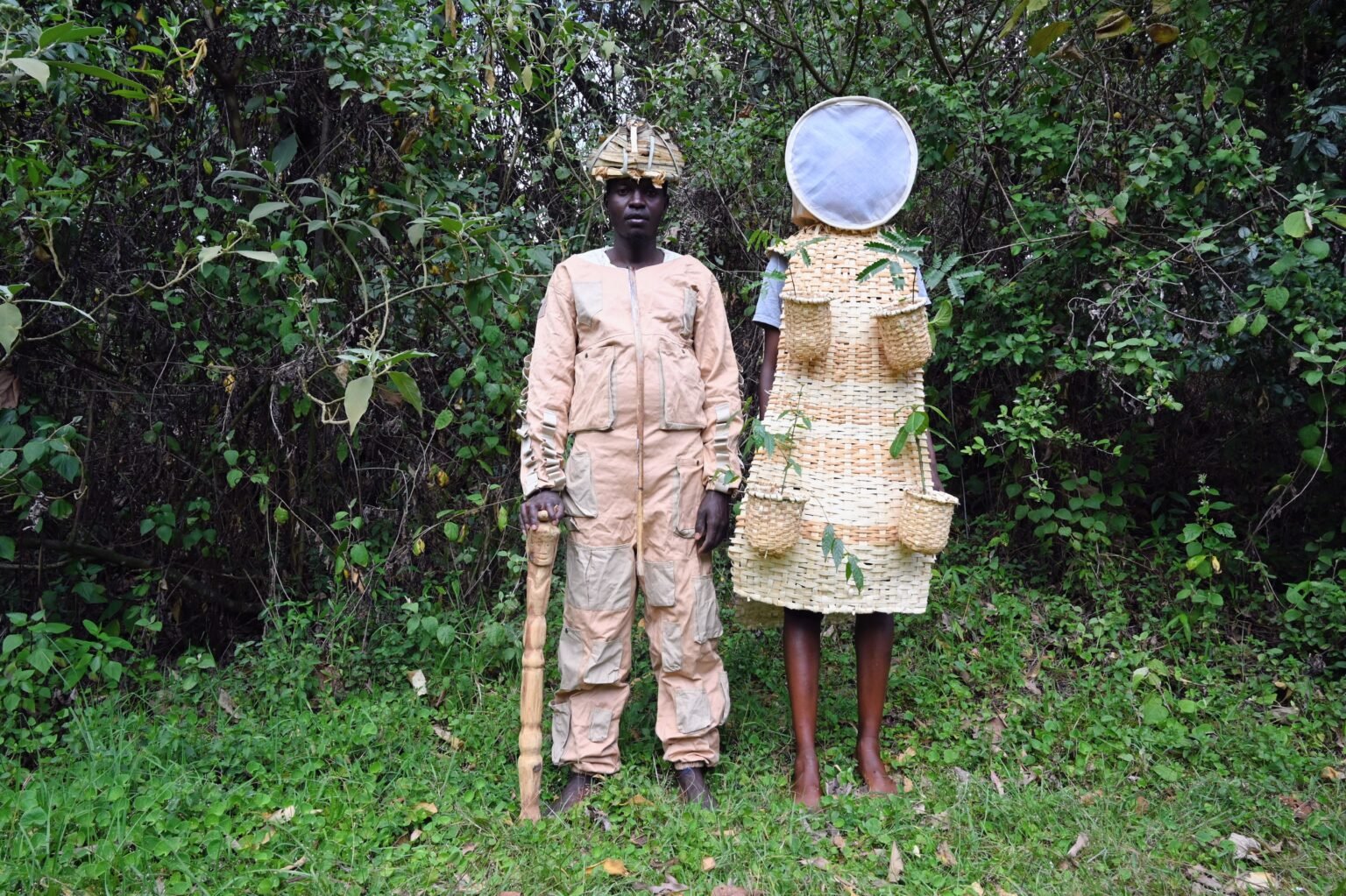
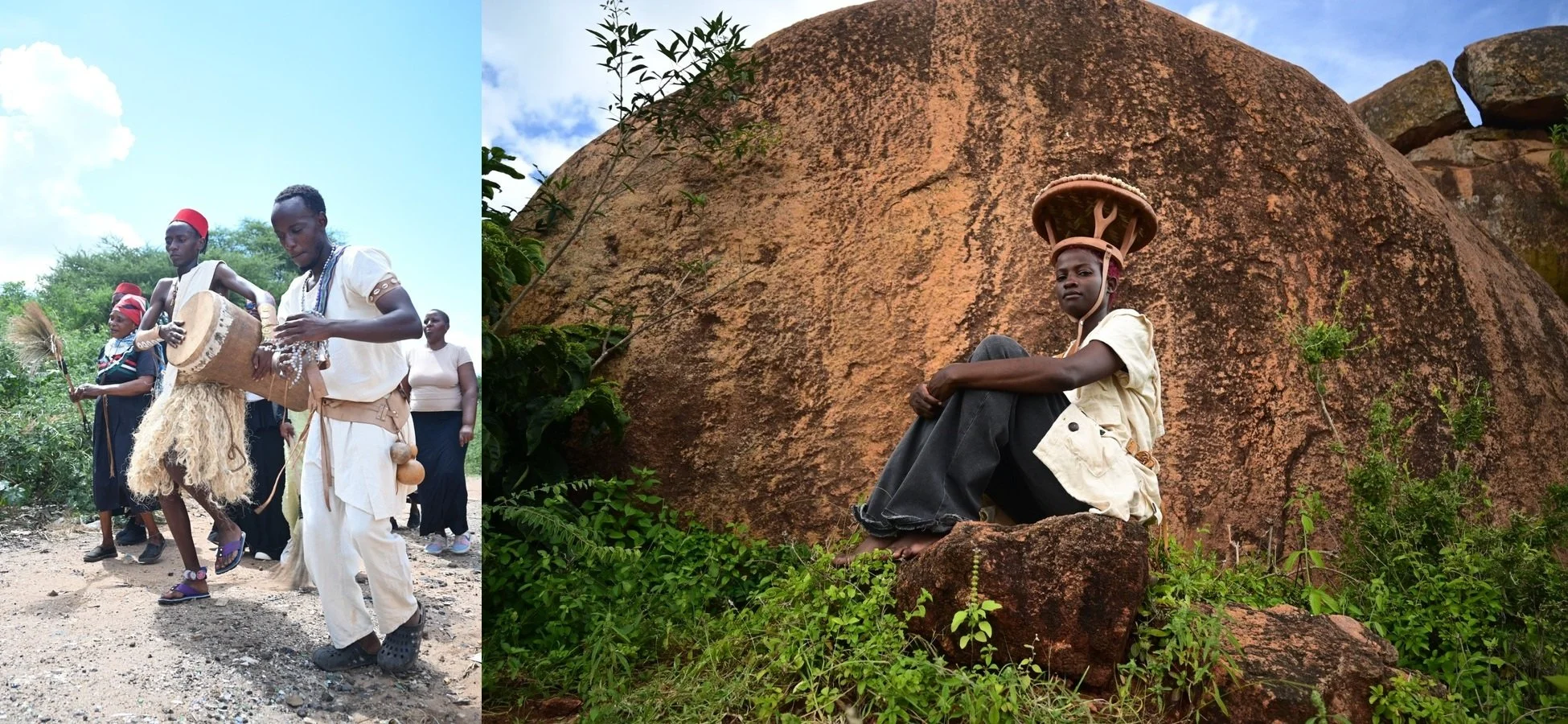
Forest wearables. Mau 2099, Masese, 2026. Two figures stand at the forest edge, one with a staff, the other with a circular face covering. Who might they be in the society the artists imagined? Courtesy Kairos Futura.
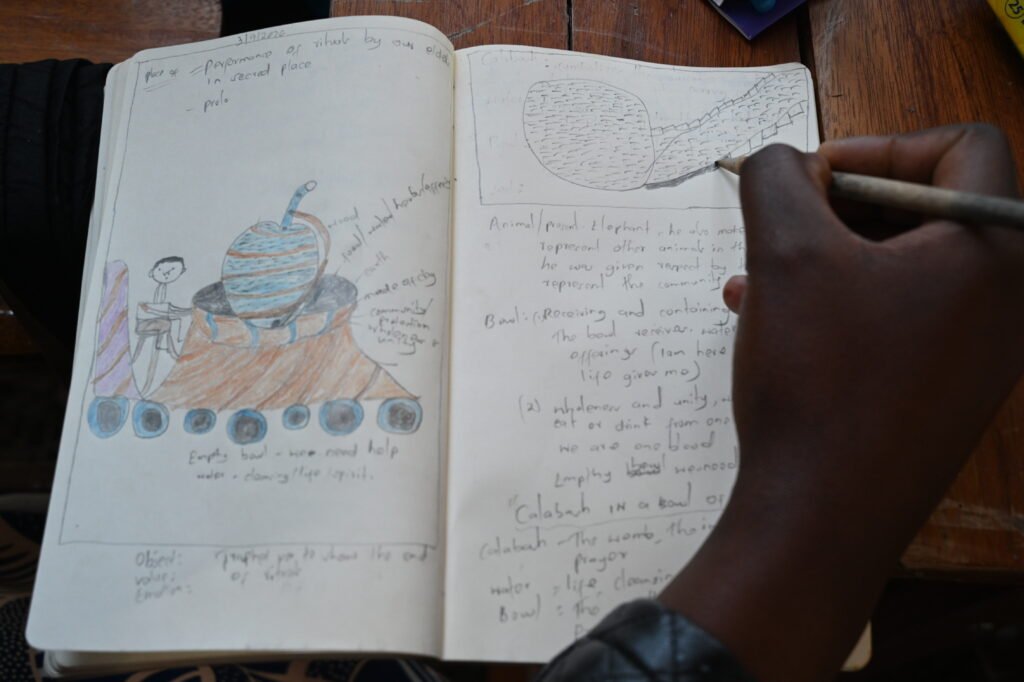
Field notebook. Mau 2099, Masese, 2026. A participant develops a drawing alongside a written account. Asking who uses an object, and why, gives it a place in a future society. Courtesy Kairos Futura.
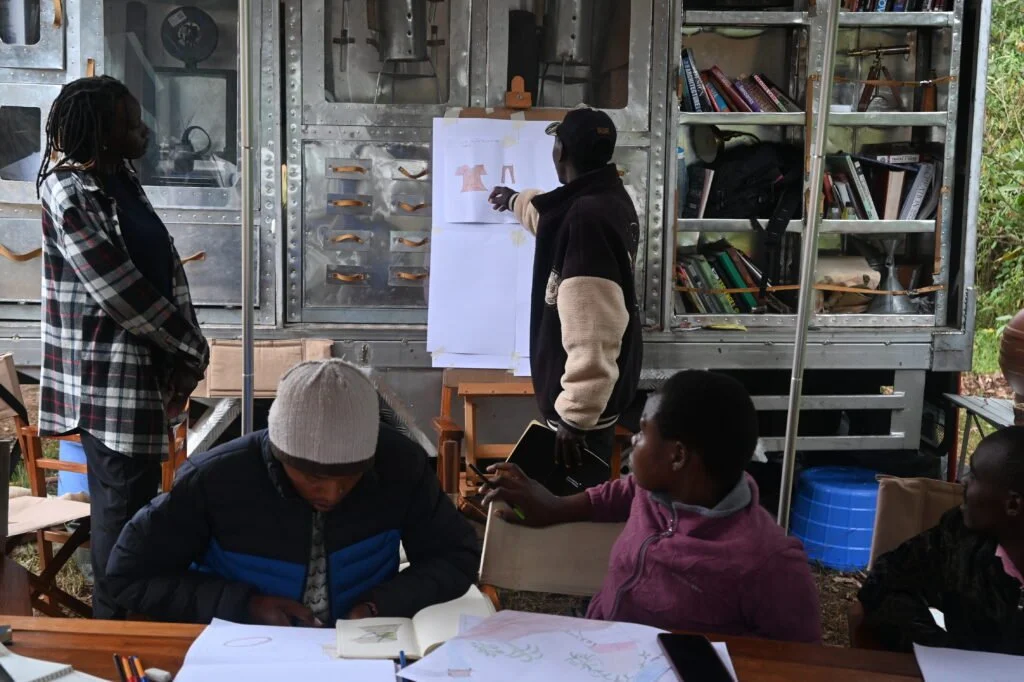
Drawing workshop. Safari Studio, Masese, 2026. A drawing is brought before the group, where one person’s proposition becomes something others can question and develop. Courtesy Kairos Futura.
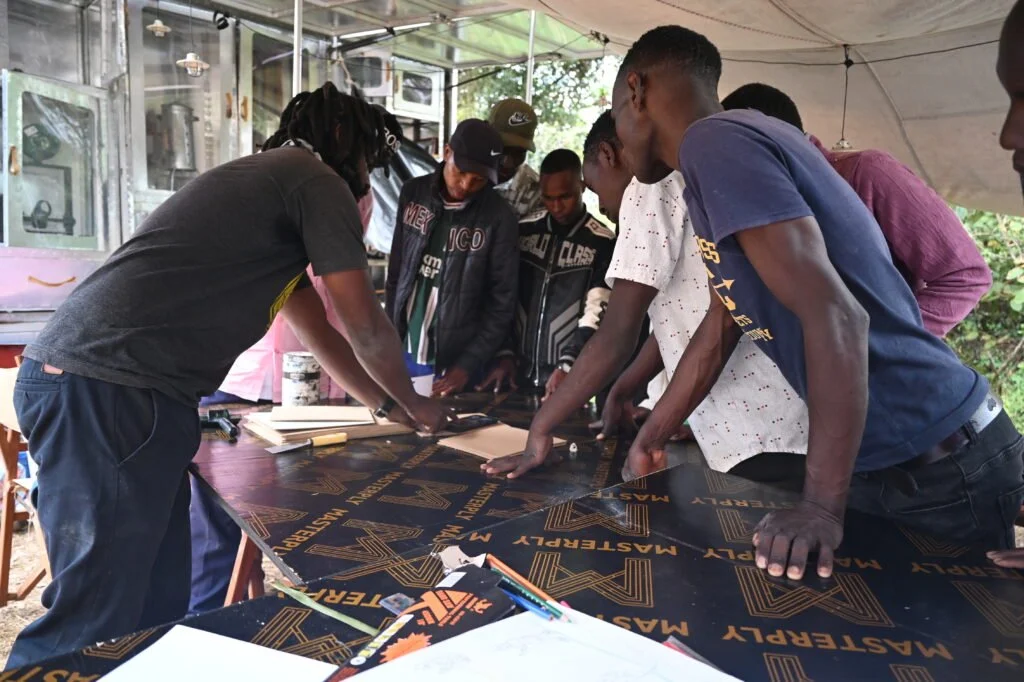
Collective worldbuilding. Safari Studio, Masese, 2026. Participants gather around a shared work surface. Which places would everyone need to recognise on a map of their future forest? Courtesy Kairos Futura.
04. Making the future tangible
An imagined future becomes more powerful when it can be touched, worn, inhabited or experienced.
Our studios function as experimental workshops where speculative ideas are translated into physical forms. Participants create sculptures, garments, architectural structures, drawings, instruments, ceremonies and artefacts that might belong to societies that do not yet exist.
Material experimentation is central to this process. Artists investigate the possibilities of locally available materials, biological matter, discarded objects and traditional making techniques.
In the Mau Forest, artists worked with materials including plant fibres, clay, wax and elephant dung, exploring how the physical intelligence of a landscape might inform the material culture of the future.
These objects are not merely illustrations of imaginary worlds. They are propositions about how we might live differently.
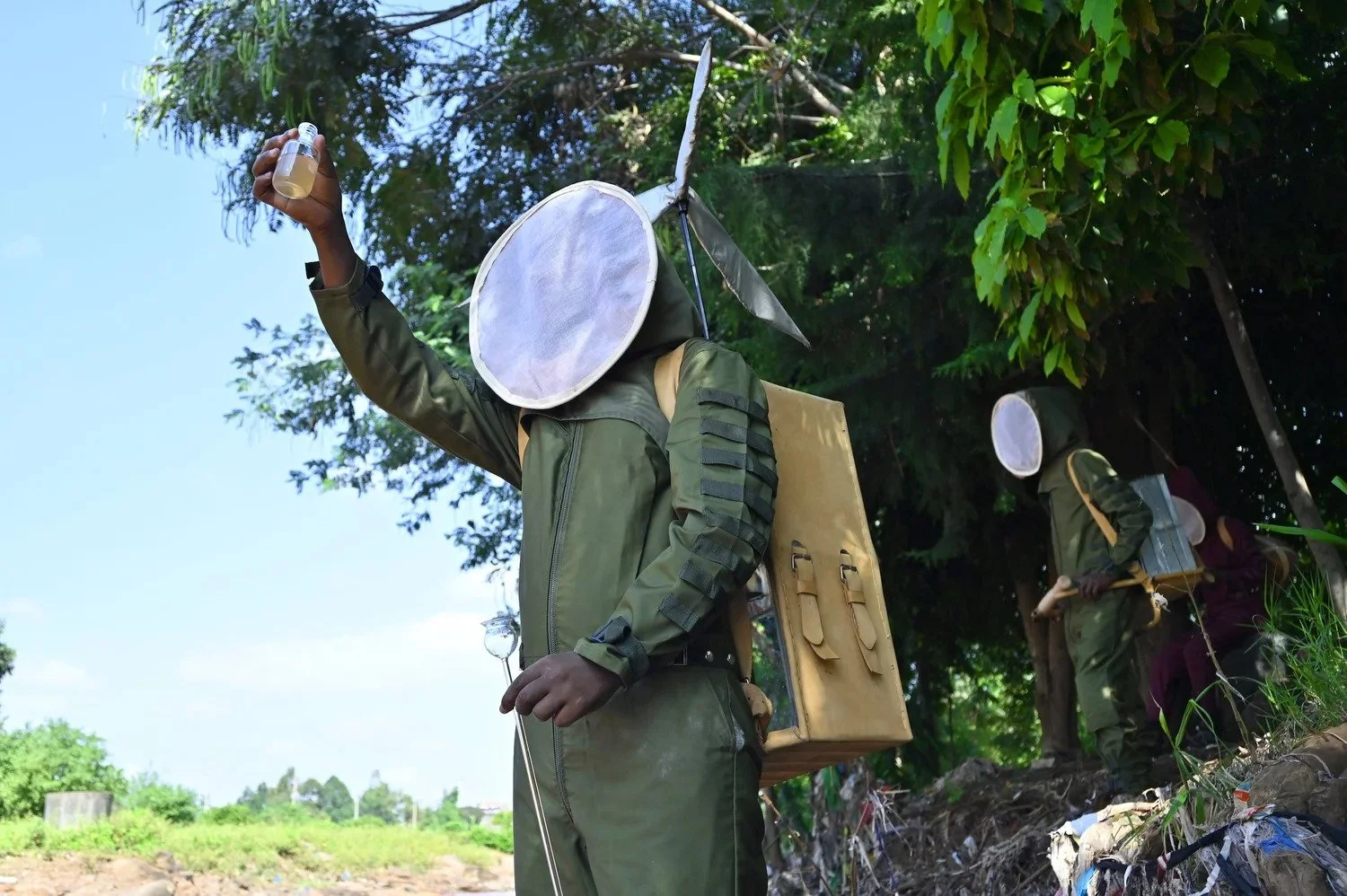
Wild Future Lab, wearable study. What might a garment do in a Nairobi where urban life has grown around forests and other species? Courtesy Kairos Futura.
05. Rituals for a changing planet
Throughout human history, rituals have helped societies articulate their values, navigate uncertainty and establish relationships with the world around them.
What rituals might emerge in a society that regarded forests, rivers and other species as integral members of its community? How might we collectively acknowledge ecological loss, celebrate regeneration or establish new responsibilities towards the places we inhabit?
Through our Future Rituals experiments, we explore the potential of ceremonial practices to transform environmental awareness into embodied cultural experience.
In Kibwezi, Kelvin collaborated with local women who safeguard sacred sites to develop a ritual at a waste-dumping site. By bringing ceremonial attention to a neglected landscape, the work invited a reconsideration of what society regards as valuable, disposable or sacred.
We are interested in how ecological responsibility might become embedded not only in legislation and infrastructure, but in the emotional and spiritual fabric of everyday life.
06. Bringing possible futures into the present
The process does not end with an exhibition.
By bringing imagined worlds into public spaces through installations, exhibitions, performances and community interventions, we invite wider audiences to encounter alternative ways of living.
At Heltz House on Ngara Road in Nairobi, visitors to Mau: A Forest Imaginarium encountered maps, wearables, drawings and rituals made in Masese. The exhibition ran from 17 October to 15 November 2026.
Our projects move between remote wilderness environments, rural communities, urban neighbourhoods and international cultural institutions. Each context provides an opportunity to test ideas, exchange knowledge and reconsider what is possible.
For participants, the process can also open pathways towards creative employment, independent artistic practices, enterprise and community-led initiatives.
We are not working towards a single, universally applicable vision of the future. We are cultivating a diversity of possibilities, generated by people with intimate knowledge of the places in which they live.
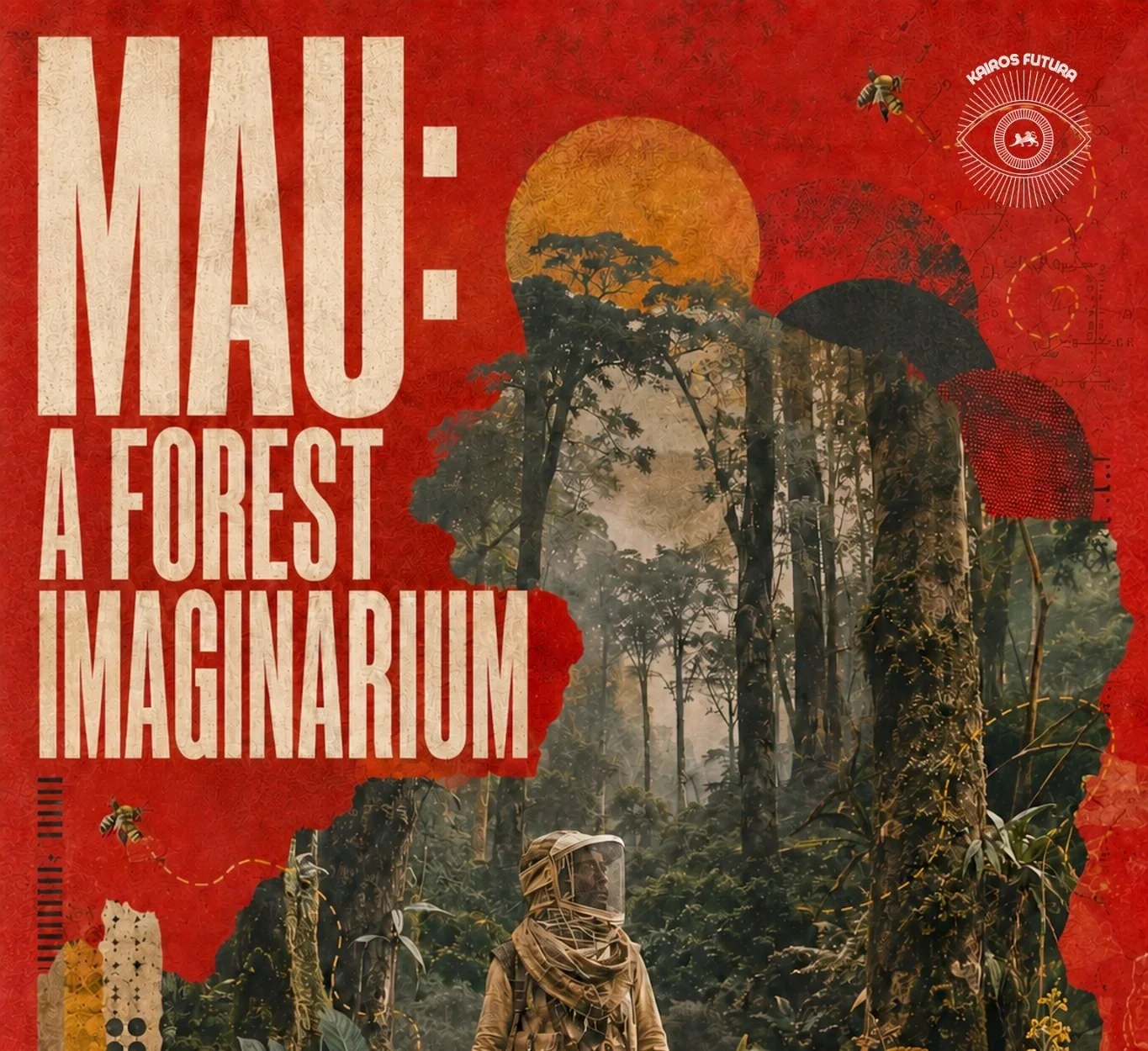
Mau: A Forest Imaginarium. Exhibition poster, Heltz House, Ngara Road, Nairobi, 17 October–15 November 2026. A public invitation into the forest world imagined by the Masese artists.
The future is not somewhere we are going. It is something we are collectively making.
Explore our projects · Collaborate with us
Chyulu Hills Safari Studio, 2026. Two figures approach a baobab. A woven form hangs from one of its branches. Courtesy Kairos Futura.